


 English

How to Choose PTFE Tubing for Industrial Applications?
Choosing the right PTFE tubing depends on the working environment, temperature, chemical exposure, pressure, dimensions, and installation requirements. For industrial applications, the tubing should not be selected by material name alone. Buyers should evaluate the required inner diameter, wall thickness, flexibility, temperature range, chemical resistance, and electrical insulation performance before placing an order.
For OEM and industrial purchasing, these specifications help determine whether standard PTFE tubing, flexible PTFE tubing, or PTFE heat shrinkable tubing is the better solution.
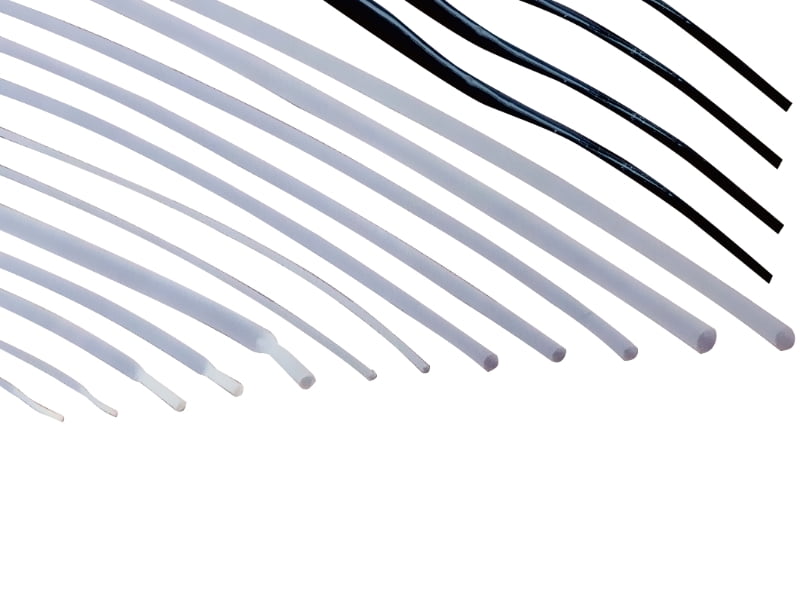
Consider the Working Temperature
Temperature is one of the first factors to check when selecting PTFE tubing for industrial applications. PTFE is known for its wide temperature tolerance, which makes it suitable for applications where conventional plastic tubing may not provide sufficient thermal stability.
LingFree's PTFE tubing information specifies a continuous operating temperature range of approximately -200°C to +260°C. However, the actual operating conditions of the finished assembly should always be checked before selecting a material and specification.
If the tubing will be exposed to rapid temperature changes, continuous high temperatures, or very low temperatures, provide the supplier with the actual temperature range so the appropriate PTFE construction can be evaluated.
Evaluate Chemical Resistance
Chemical compatibility is another major reason industrial buyers choose PTFE. PTFE has strong resistance to many acids, bases, solvents, and corrosive substances, making it useful for demanding fluid handling and chemical environments.
When selecting PTFE tubing, do not simply state that the application is chemical-related. Tell the manufacturer what medium will pass through the tube, its concentration, operating temperature, and exposure time. These details allow the supplier to evaluate compatibility more accurately.
For chemical processing, laboratory equipment, sensors, and industrial fluid systems, chemical resistance may be more important than choosing the lowest-cost tubing material.
Choose the Correct Inner Diameter and Wall Thickness
The inner diameter directly affects fluid or gas flow, while wall thickness influences mechanical protection, flexibility, and overall dimensions. These two specifications should therefore be confirmed before purchasing PTFE tubing in bulk.
| Specification | Why It Matters |
|---|---|
| Inner diameter | Affects fluid, gas, or cable clearance and installation fit |
| Outer diameter | Determines the overall installation space required |
| Wall thickness | Influences mechanical protection and flexibility |
| Length | Determines installation and production requirements |
For OEM projects, providing a technical drawing or a complete dimensional specification can help the manufacturer confirm the appropriate tubing size before sampling.
Check Flexibility and Installation Requirements
Not every PTFE tubing application has the same installation conditions. Some systems require rigid or semi-rigid tubing, while others need tubing that can be routed through narrow spaces or around bends.
For compact equipment, flexible PTFE tubing can simplify routing. If the application requires electrical insulation or protection around wires and components, a PTFE heat shrinkable tubing solution may be more appropriate than standard PTFE TUBE.
LingFree offers both standard PTFE Tube products and PTFE Heat Shrinkable Tubing, allowing buyers to select the construction according to the application.
Consider Electrical Insulation Requirements
PTFE is also widely used as an electrical insulation material because of its dielectric properties and temperature stability. This makes PTFE tubing suitable for wires, cables, sensors, electronic components, and other electrical assemblies.
For electrical applications, buyers should provide information about voltage requirements, operating temperature, conductor size, installation space, and required insulation dimensions. The supplier can then determine whether standard PTFE tubing or another insulating sleeve is more appropriate.
When electrical safety certifications are required, confirm the applicable certification and testing requirements before placing a production order.
Select the Right PTFE Tubing for Different Applications
| Application | Important Selection Factors |
|---|---|
| Chemical processing | Chemical compatibility, temperature, inner diameter and wall thickness |
| Electrical insulation | Dielectric performance, temperature, dimensions and installation space |
| Automotive systems | Temperature, chemical exposure, vibration and dimensional stability |
| Medical and laboratory equipment | Chemical resistance, cleanliness, dimensions and application requirements |
| Industrial fluid transfer | Medium compatibility, flow requirements, temperature and pressure conditions |
Standard PTFE TUBE or PTFE Heat Shrinkable Tubing?
Standard PTFE tube is generally suitable when the main requirement is to transport or isolate a fluid, gas, wire, or component within a defined tube diameter. PTFE heat shrinkable tubing is different because it is designed to contract around a component when heated.
The choice should therefore be based on the function required rather than simply selecting the PTFE product with the highest temperature resistance.
| Requirement | Potential Solution |
|---|---|
| Fluid or gas transfer | Standard PTFE Tube |
| Electrical insulation around components | PTFE Heat Shrinkable Tubing |
| High chemical resistance | PTFE-based tubing |
| Compact protective covering | PTFE Heat Shrinkable Tubing |
What Should You Provide When Requesting a Quote?
For B2B purchasing, a detailed specification helps the PTFE tubing manufacturer recommend the right product and provide an accurate quotation.
Application and industry
Medium or material passing through the tubing
Required inner diameter and outer diameter
Required wall thickness
Operating temperature range
Pressure or mechanical requirements
Required tubing length
Flexibility and installation requirements
Required quantity and packaging
Applicable certifications or compliance requirements
If you already have a drawing or sample, sharing it with the supplier can make product selection and sample development more efficient.
Why Work With an Experienced PTFE Tubing Manufacturer?
For industrial and OEM applications, the tubing material is only one part of the purchasing decision. Consistent dimensions, production capability, quality control, customization, and technical communication can also affect the performance of the finished product.
LingFree has been engaged in the research, development, production, and sales of insulating tubes since 2008. Its product range includes PTFE tubes, PTFE heat shrinkable tubing, UL heat shrinkable tubing, Fiberglass Sleeving, PVC tubing, and other insulation products. The company also states that its products have UL and CSA certifications and comply with EU RoHS 2.0 and REACH requirements. :contentReference[oaicite:1]{index=1}
If you are sourcing PTFE tubing for an industrial or OEM project, provide your dimensions, working conditions, application, quantity, and required specifications to LingFree for product evaluation and quotation.
FAQ About PTFE Tubing
What is PTFE tubing commonly used for?
PTFE tubing is commonly used for chemical transfer, fluid handling, electrical insulation, automotive systems, laboratory equipment, and other applications requiring chemical resistance, temperature stability, low friction, or electrical insulation.
What temperature can PTFE tubing withstand?
The applicable temperature range depends on the specific PTFE product and application. LingFree's published PTFE information lists a continuous operating range of approximately -200°C to +260°C, but buyers should confirm the required specification for their actual working conditions.
Is PTFE tubing suitable for chemical applications?
PTFE is widely selected for chemical applications because of its strong resistance to many acids, bases, solvents, and corrosive substances. The actual chemical compatibility should still be evaluated based on the specific medium and operating conditions.
What information should I give a PTFE tubing supplier?
Provide the application, medium, inner and outer diameter, wall thickness, operating temperature, pressure conditions, required length, quantity, and any certification requirements. A drawing or sample can also help the manufacturer confirm the specification.
